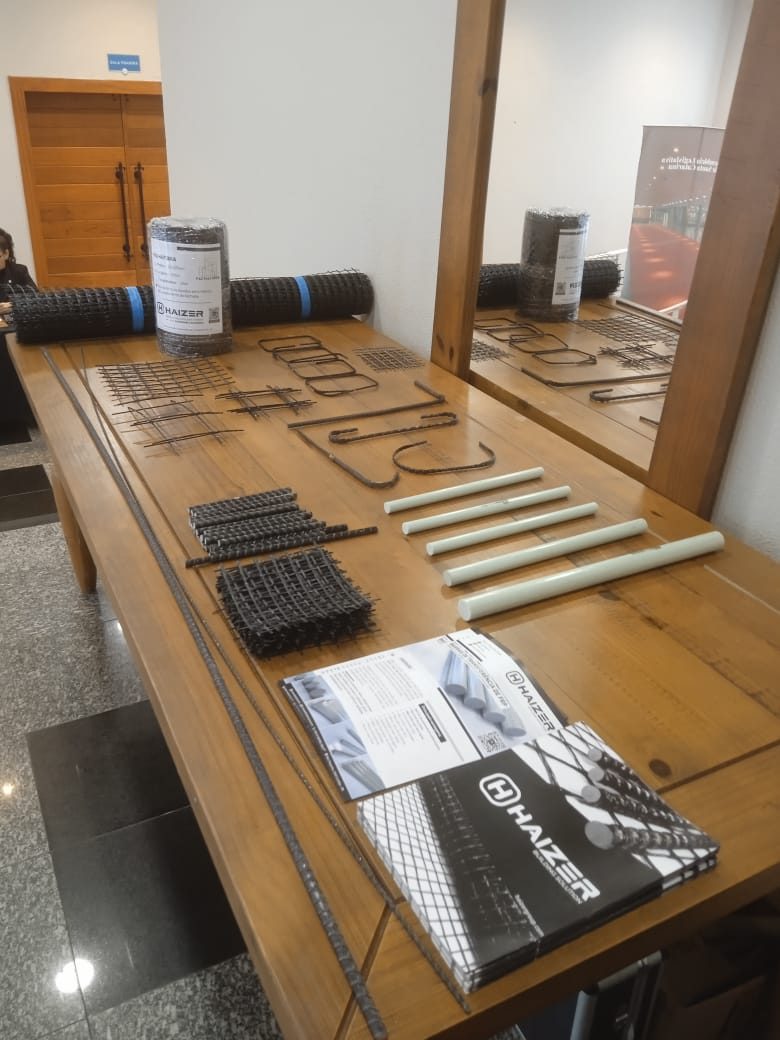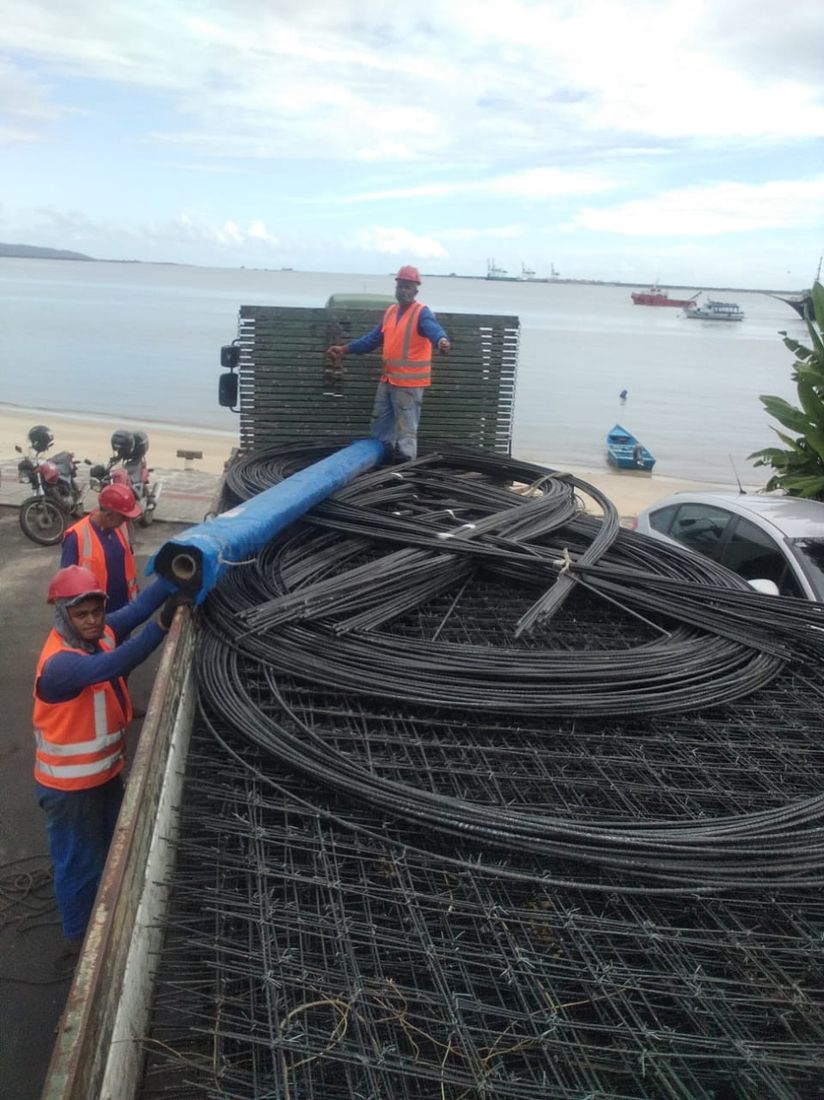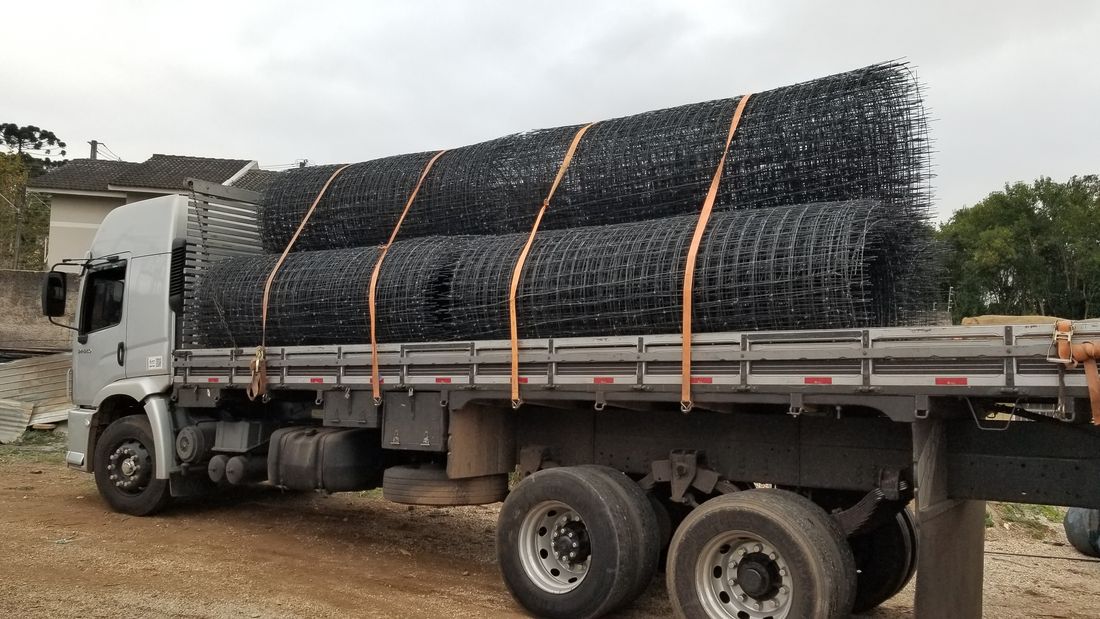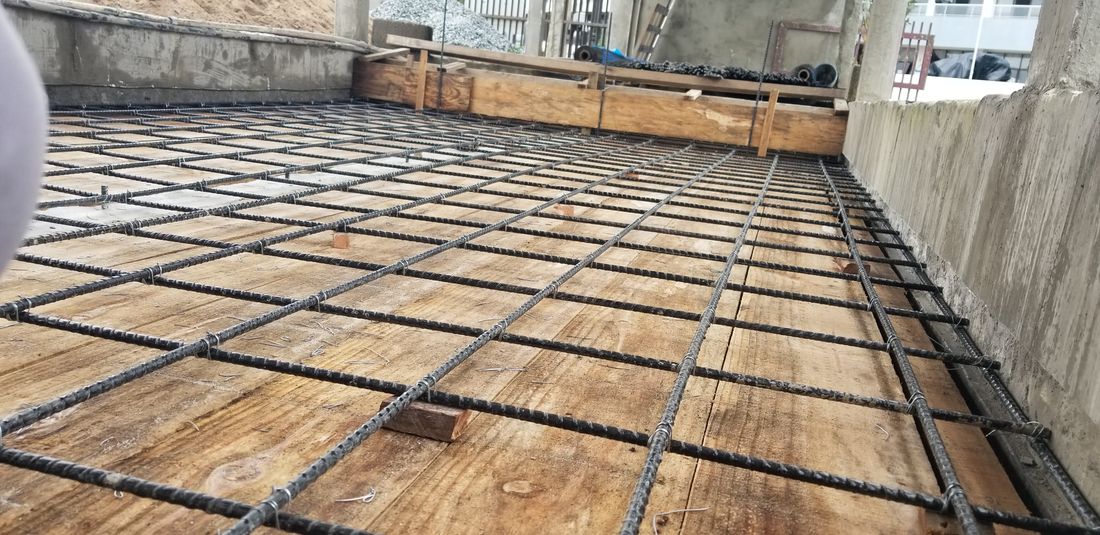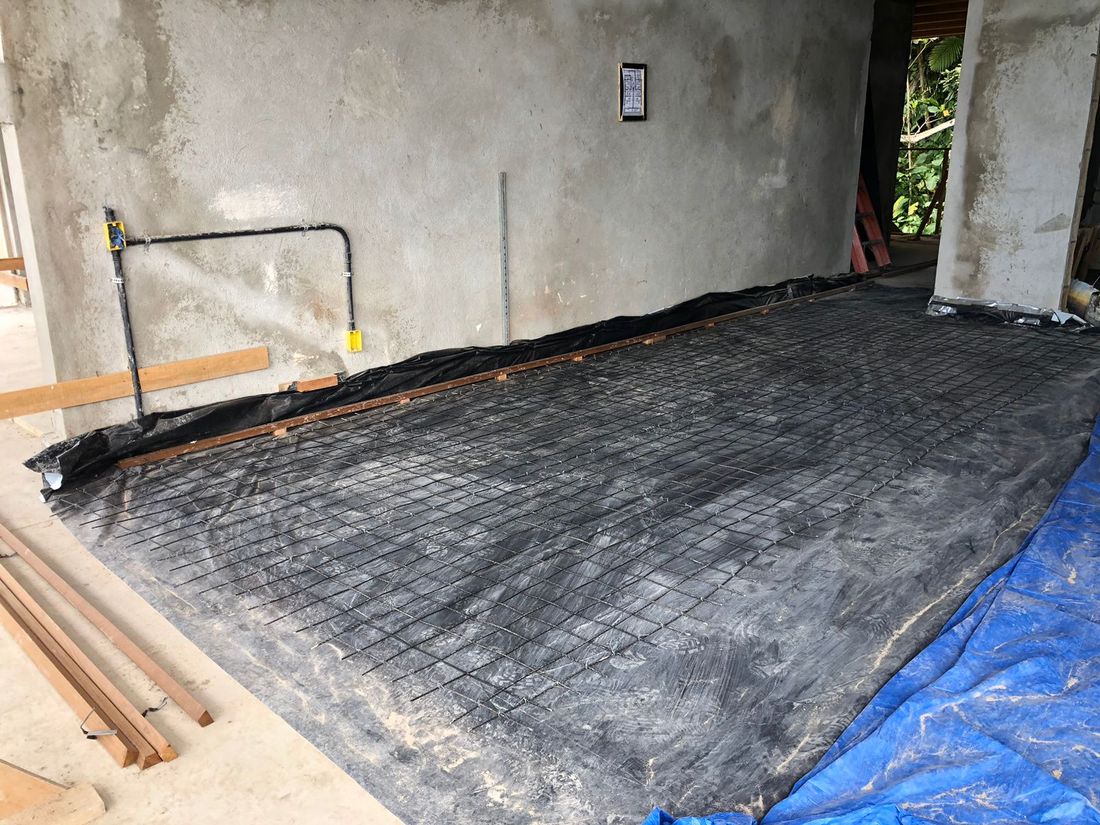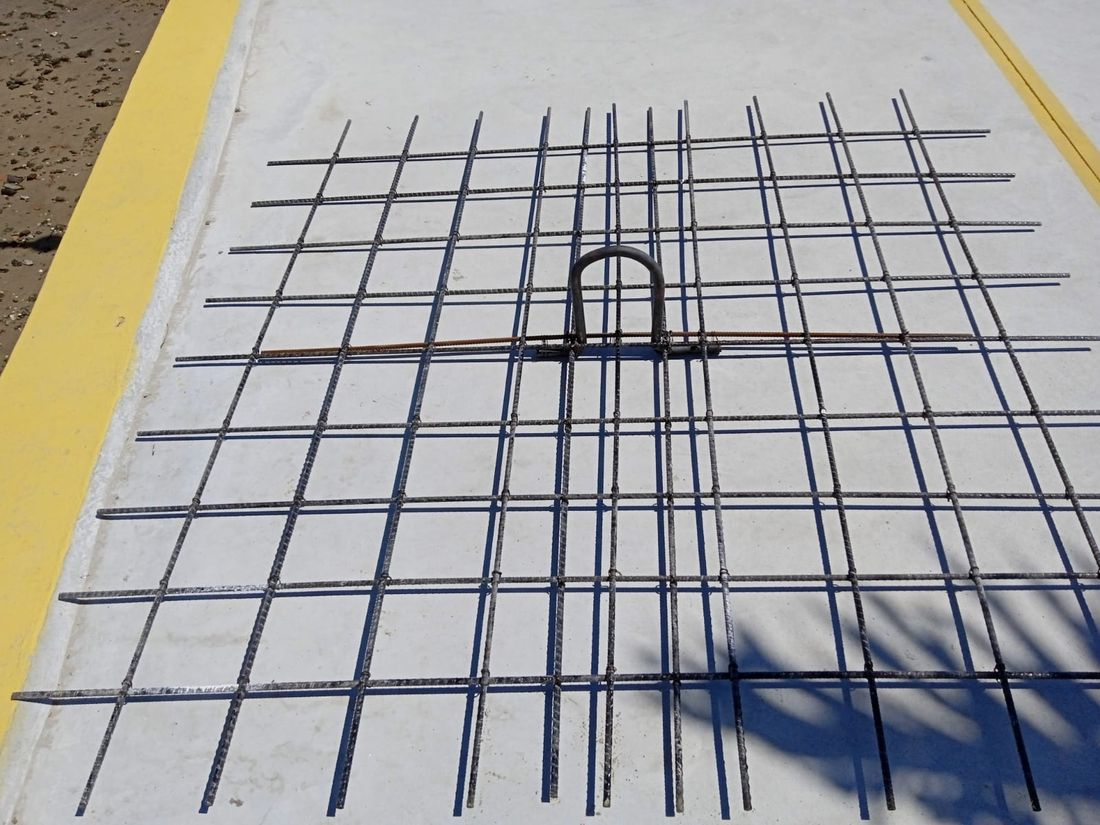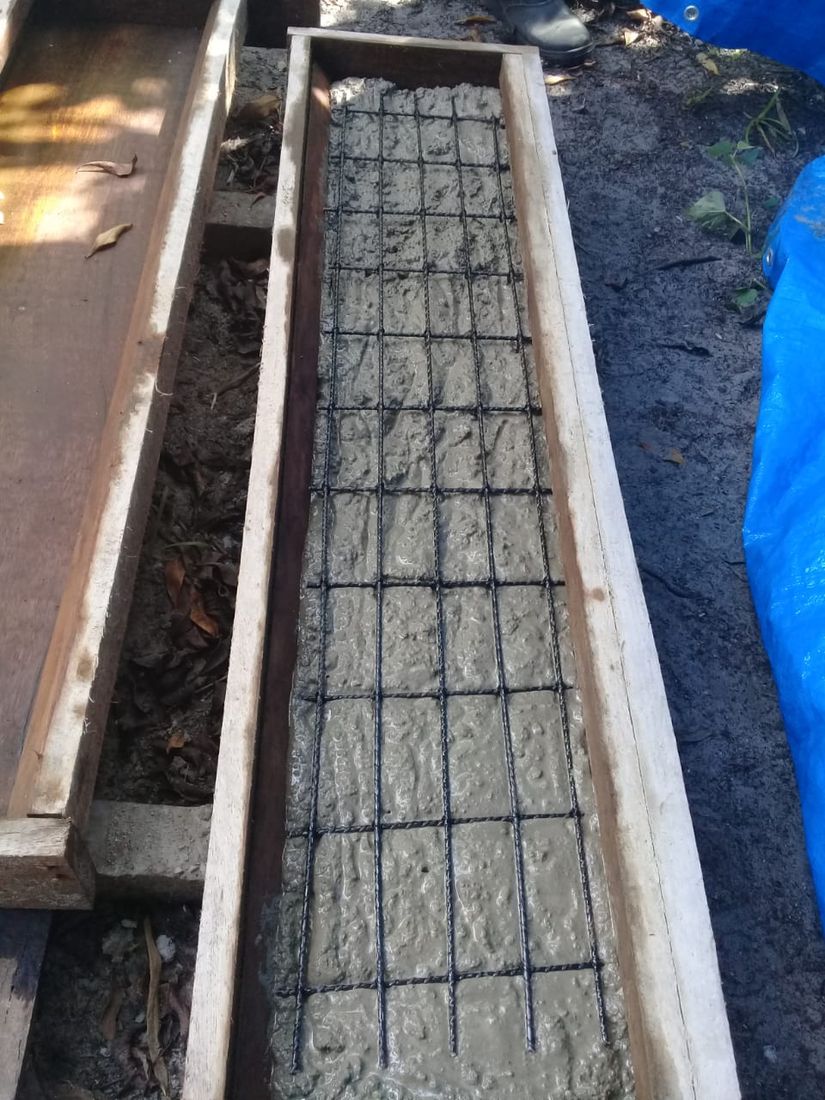
The GFRP mesh — Glass Fiber Reinforced Polymer, a non-metallic composite material also known in the market as fiber mesh, is basically composed of fiber rebars. This is a technology consolidated for over 30 years in countries such as Canada, the United States, Italy and Germany, now regulated in Brazil by ABNT NBR 17201:2025 and ABNT NBR 17196:2025. The main characteristic of GFRP is the complete absence of any metallic component: no oxidation, no cover expansion, no degradation from chlorides, acids or alkalis — ensuring a minimum structural service life of 80 years even in highly aggressive environments.
| Feature | Factory-produced Mesh | Mesh Assembled with Rebars |
|---|---|---|
| Bar connection process | Integrated into the pultrusion process — longitudinal bar inserted with liquid resin, cured with the transverse bar | Tying with galvanized wire or other method (Hellermann tape, e.g.) |
| Connection strength | Monolithic connection — bar properties preserved at the node region | Positional function until concreting; must not be counted as structural resistance |
| Spacing | Fixed per factory specification | Flexible, per project |
| Supply formats | Rolls up to 100 m long and panels | Rebars supplied by Haizer; assembly on site or at Haizer |
| Traceability ABNT NBR 17201-1:2025 | Label, guarantee certificate and lot declaration issued by Haizer | Label, guarantee certificate and lot declaration issued by Haizer |
*English twist: connection where the already-cured transverse bar is physically inserted between the longitudinal bars during manufacturing, with the longitudinal resin still in liquid state. Although the visual result resembles a mesh with an integrated node, the mechanical behavior of the node may differ. This technology is under evaluation and does not currently have test data available for structural design.
What pre-assembled FRP mesh delivers as concrete reinforcement:
Depending on project requirements, bars are produced with Glass, Basalt, Carbon or Aramid Fibers, or by combining these fibers.